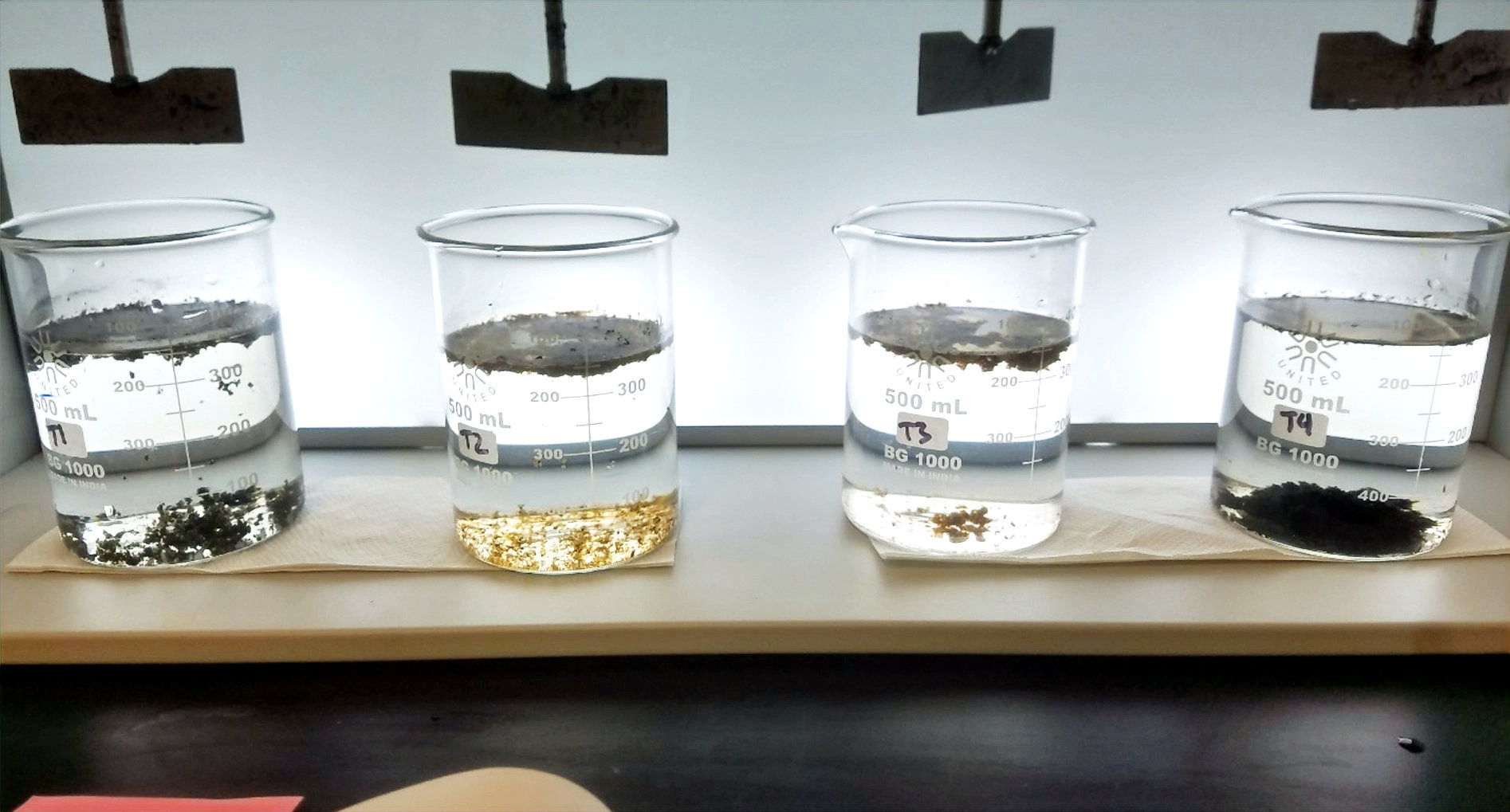
Application boundary: Polymer references here concern contained, professionally reviewed trials. Cationic products require particular aquatic-risk review and are not a recommendation for dosing natural streams. Product suitability, residual control and the receiving environment must be assessed before field use.
Anionic polyacrylamide is often discussed in erosion and sediment control because it can help fine mineral particles form larger, faster-settling flocs. After wildfire, that capability can be attractive. Burned slopes may release fine clay, silt, and ash into roadside ditches, sediment ponds, temporary impoundments, canals, and water-treatment intakes. A small quantity of the right polymer can sometimes reduce turbidity dramatically. Yet the word "sometimes" matters. Burn-scar water is not a normal construction-site runoff sample, and anionic PAM is not a universal fix.
The main advantage of anionic PAM is particle bridging. High molecular weight polymer chains can connect dispersed particles so they settle more readily. This works best when the target solids are mineral fines with surface chemistry that responds to the selected charge density and when mixing is controlled enough to distribute the polymer without breaking the floc. In post-fire settings, these conditions may exist in a sediment basin receiving eroded soil, in a quarry or borrow area affected by wildfire, or in a municipal pre-treatment pond that receives turbid runoff after storms.
However, burned watersheds can add complications. Ash may alter pH and alkalinity. Charcoal and natural organic matter can consume treatment capacity or create floating material that does not settle like mineral silt. Very low solids water may not provide enough collision opportunities for bridging. Extremely high solids water may need staged settling or mechanical removal before polymer becomes efficient. This is why a field team should evaluate anionic PAM as one candidate in a controlled screening program, not as a default answer.
The best starting point is to define the treatment objective. If the goal is to protect a pump intake for a few days, the design may focus on rapid settling in a small temporary basin. If the goal is reservoir protection, the program may focus on upstream sediment capture and long-duration storm response. If the goal is industrial reuse, the clarified water may need consistent turbidity, filtration compatibility, and low carryover. Each objective changes the acceptable dose, mixing energy, settling time, and monitoring plan.
A technical comparison can begin with a water treatment polymer product range and dedicated notes on anionic polyacrylamide, but site-specific jar testing must decide the program. Product selection should include at least two charge densities and possibly more than one molecular weight. A very high molecular weight polymer may give dramatic floc in a jar but fail under field shear. A lower charge or lower molecular weight product may be less impressive visually but more stable in a channel or pipe.
Conditions that favour anionic PAM
Anionic PAM is more likely to fit when the water contains fine mineral sediment, the pH is not extreme, the dose can be measured accurately, and there is enough mixing distance before the settling zone. It also fits better when operators can maintain polymer make-down quality. Poorly hydrated polymer can create clumps, inconsistent dosing, and misleading trial results. Dry product should be wetted and aged according to supplier guidance, and solution concentration should be kept low enough for proper dispersion.
Another favourable condition is predictable flow. Polymer systems dislike chaos. A basin with wildly changing inflow, short-circuiting, and no retention time may waste even a good product. Simple hydraulic improvements can matter: baffles, inlet energy dissipation, staged ponds, and regular sludge removal. In many cases, improving the basin makes the polymer look better because the process finally gives flocs a chance to settle.
Conditions that warn against a simple anionic-only program
Anionic PAM may fail when the water contains high dissolved organic content, oil, firefighting residue, or unusual chemistry. It may also be a poor match for sludge dewatering where the target solids are organic-rich and positively charged treatment chemistry is more useful. In those cases, a cationic option may be screened carefully. For separately contained sludge conditioning, references on cationic polyacrylamide can help frame the comparison, but this is not a recommendation for open-water dosing. The exact formulation and receiving environment require responsible review before use.
Another warning sign is a slimy or stringy treated sample. That can indicate overdosing, poor mixing, or a product that is too strong for the application. More polymer is not the same as better treatment. Overdose can increase residual polymer, blind filters, interfere with downstream processes, and create poor-looking water even when solids appear to settle. The field rule is to find the minimum effective dose under realistic mixing, not the dose that makes the biggest floc in a still jar.
Keep catchment context separate from product evidence
Historical fire-research references are not product manuals. Their value is in showing that fire behaviour, climate, vegetation, and watershed response are linked. That perspective should make treatment teams more cautious and more observant. A storm on a recently burned slope is not simply "dirty water." It is a changing signal from a disturbed landscape. Operators should connect treatment notes with rainfall data, erosion observations, sediment source areas, and recovery progress.
Internal pages such as research in Patagonia and research in Australia remind us that fire regimes differ by region. Treatment programs differ too. Anionic PAM can be a strong tool for mineral sediment control, but the best programs use it with testing, monitoring, and respect for the watershed that produced the water.